 NY
NY Aircraft category · OPF TEB
Turboprop Charter: Miami to New York
Published · Updated
A turboprop is the friendliest price point for flying privately out of South Florida. Aircraft such as the King Air 350 and the Pilatus PC-12 give up a little cruise speed in return for one of the lowest hourly rates in private aviation and the run of small regional fields — a sensible, unfussy first step onto the Miami–New York route.
Departing Miami-Opa Locka Executive Airport (OPF) for Teterboro Airport (TEB) means a relaxed FBO walk-on at both ends rather than the lines at Miami International or LaGuardia.
Private charters between Miami and New York typically depart from Miami-Opa Locka Executive Airport (OPF), Fort Lauderdale Executive Airport (FXE), President Donald J. Trump International Airport (DJT), or Miami International Airport (MIA) and arrive at Teterboro Airport (TEB), Westchester County Airport (HPN), Republic Airport (FRG), or Long Island MacArthur Airport (ISP).
Compare Turboprops for Miami to New York
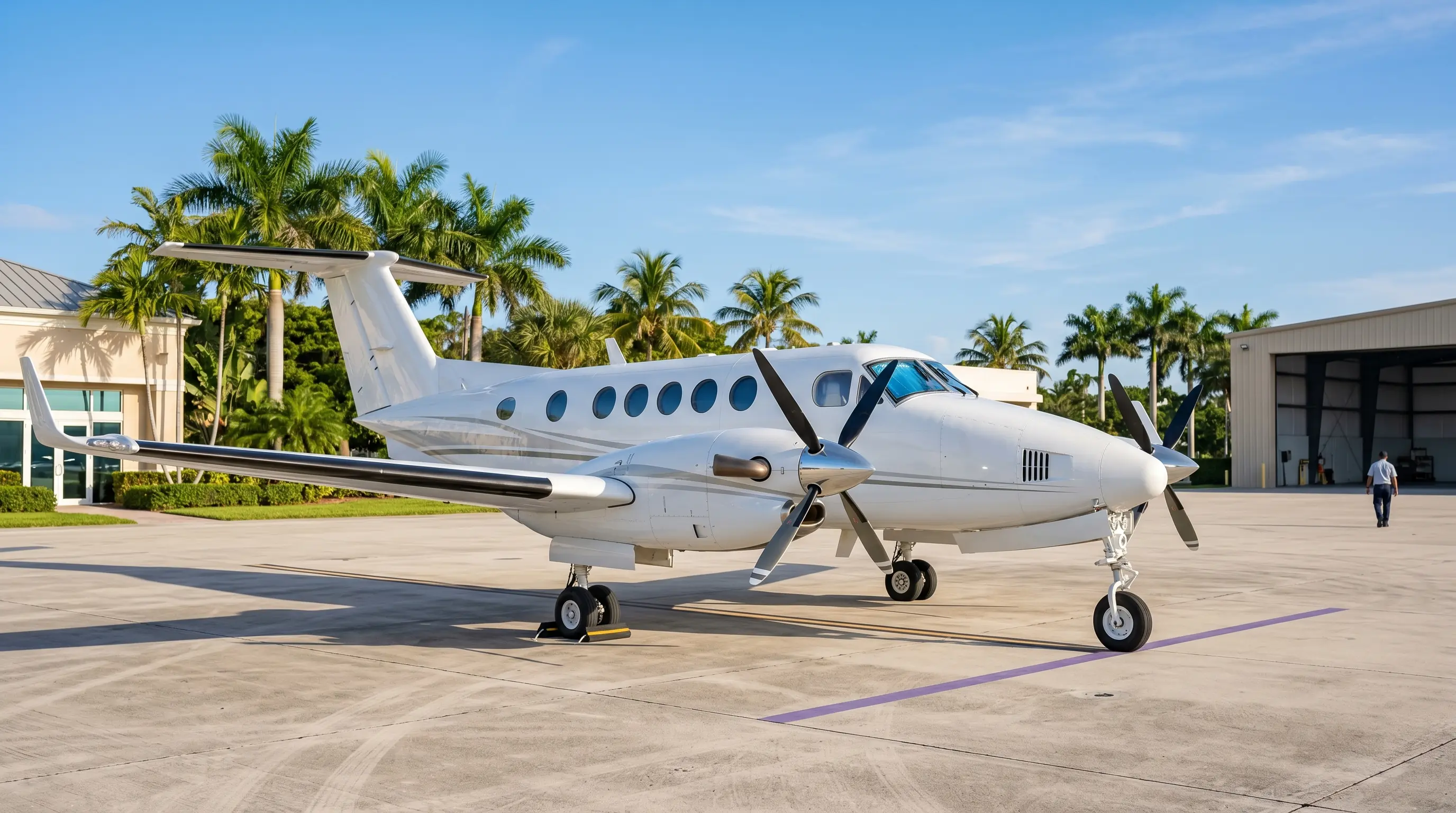 Beechcraft King Air 350 Charter View details
 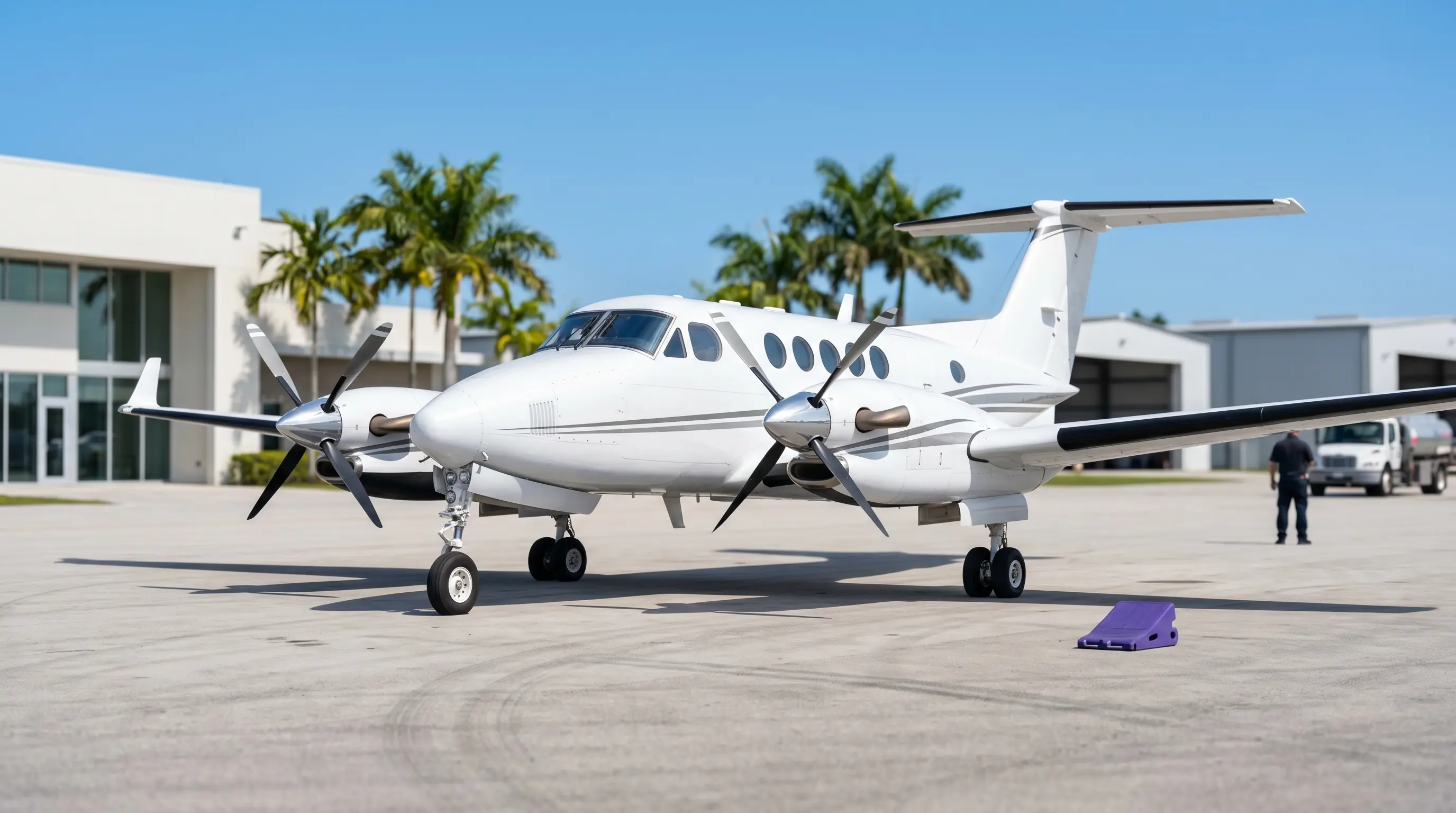 Beechcraft King Air 260 Charter View details
 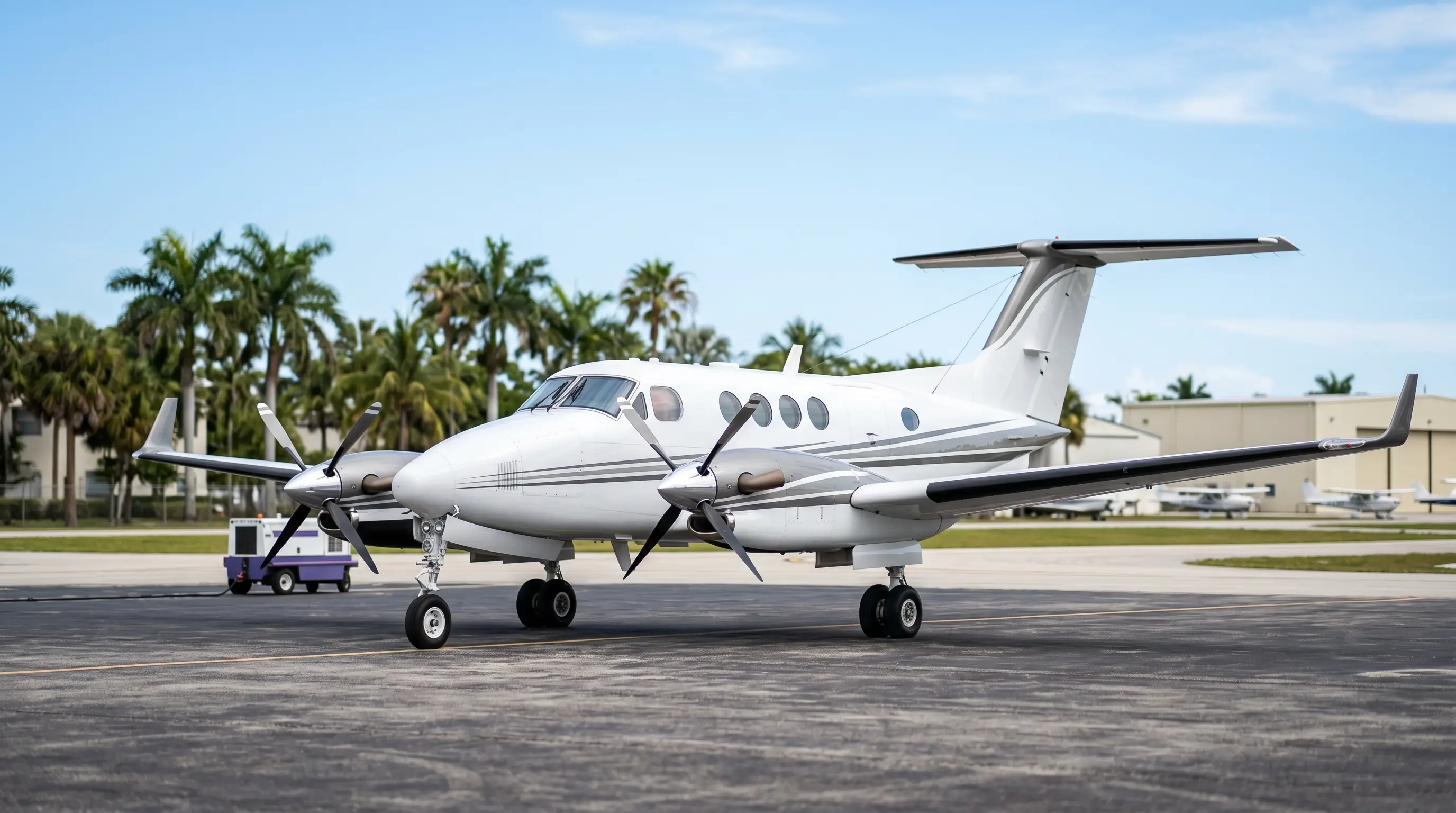 Beechcraft King Air C90GTx Charter View details
 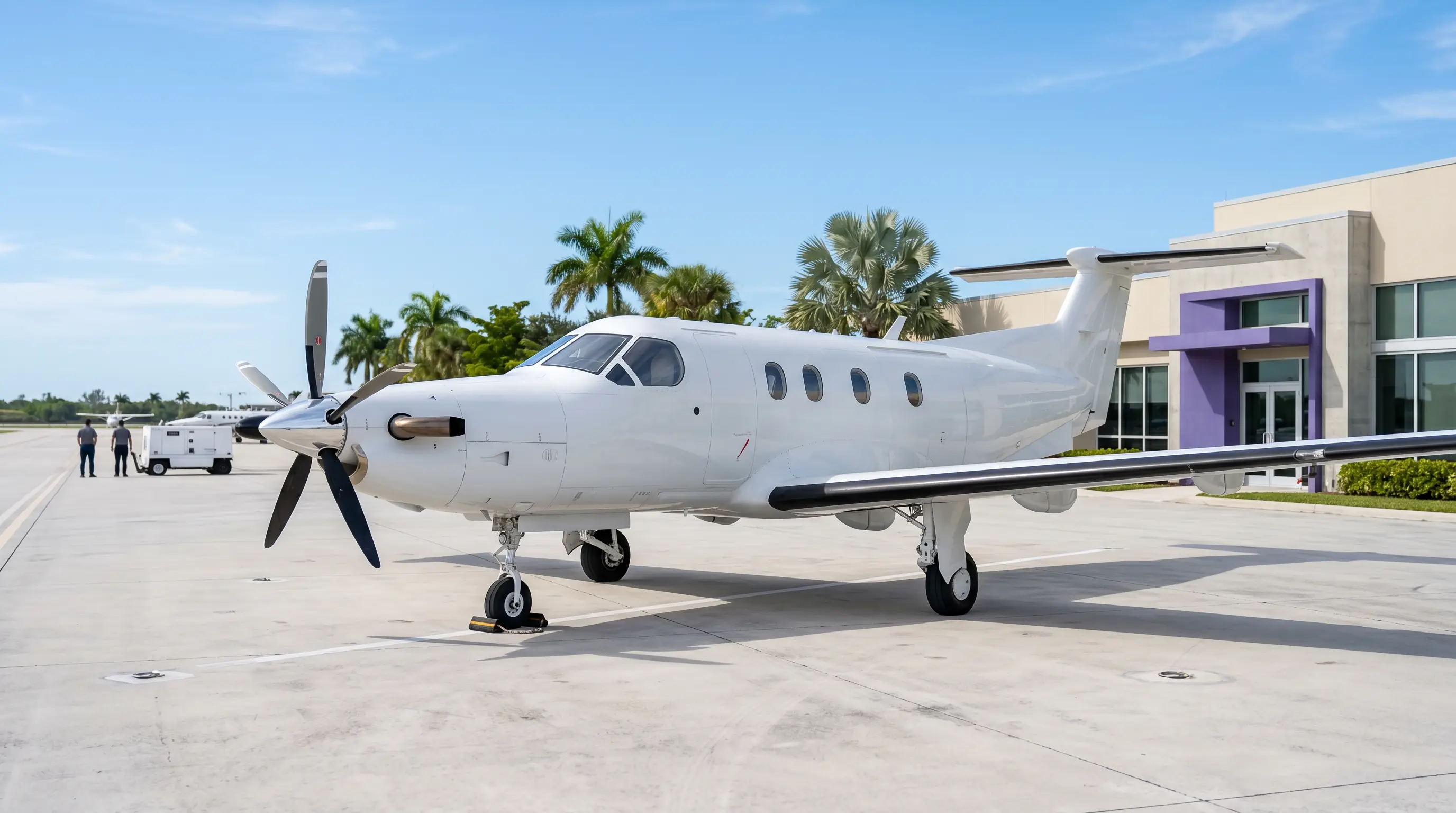 Pilatus PC-12 Charter View details
 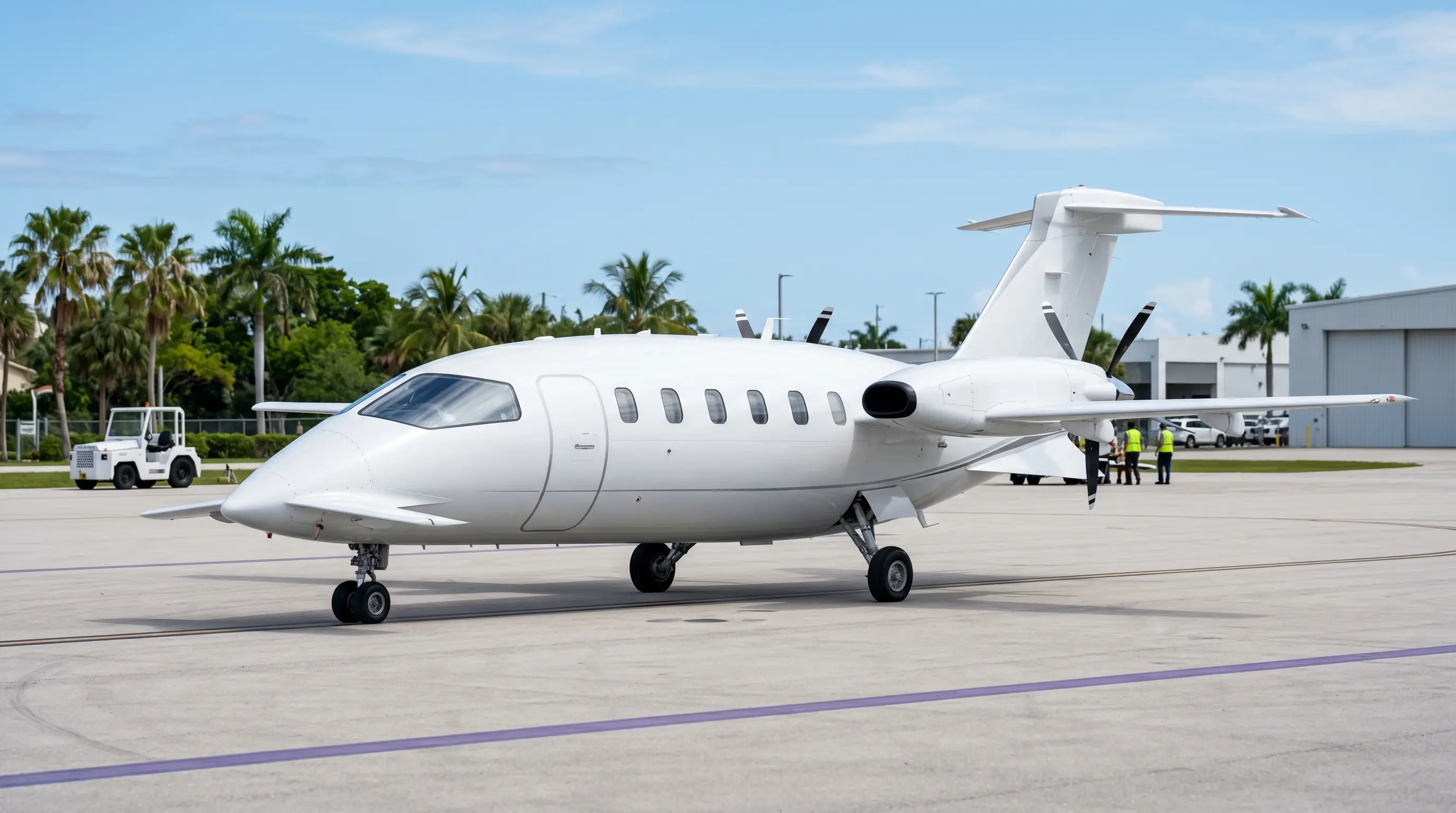 Piaggio Avanti EVO Charter View details
 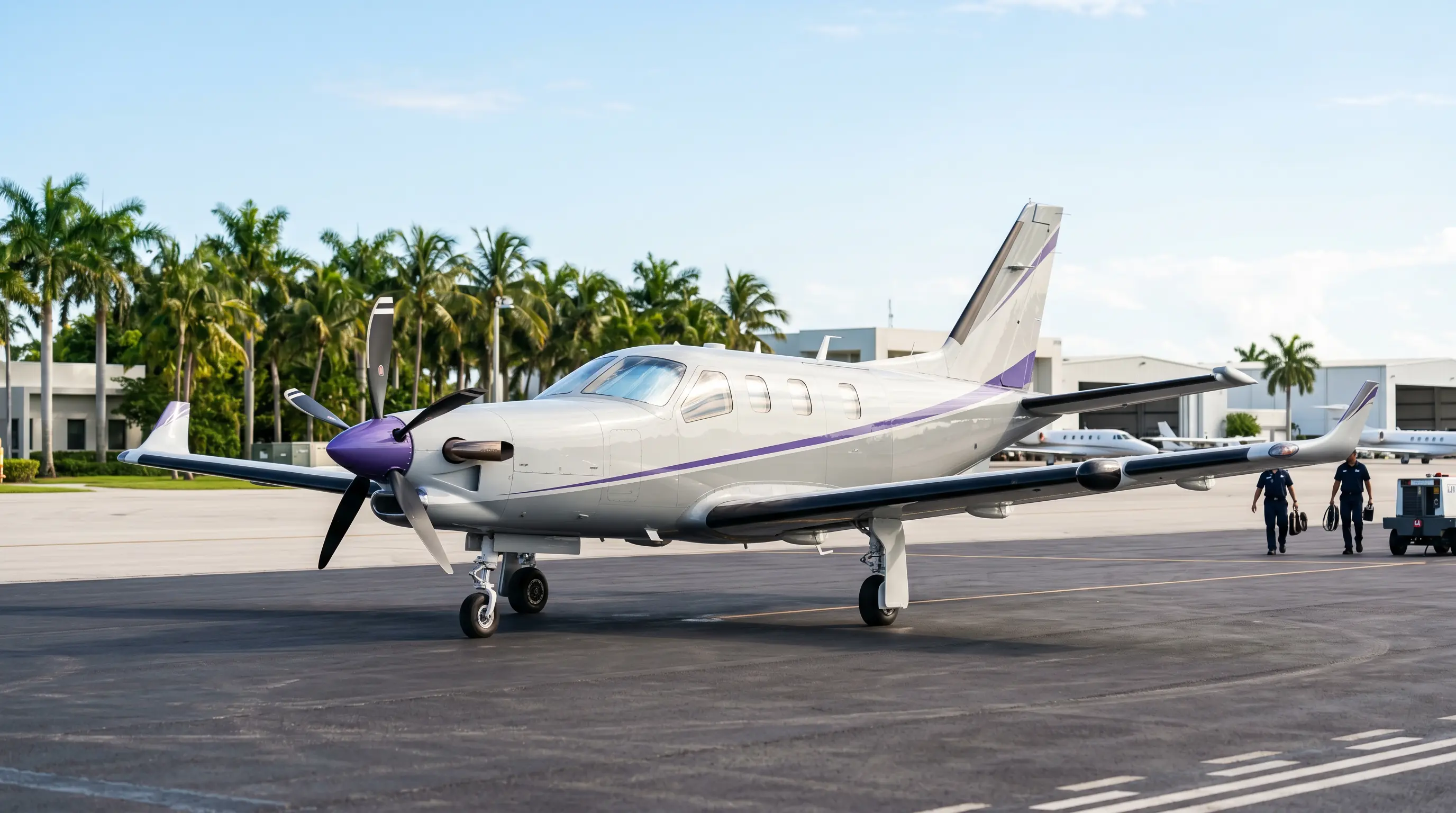 Daher TBM 960 Charter View details
 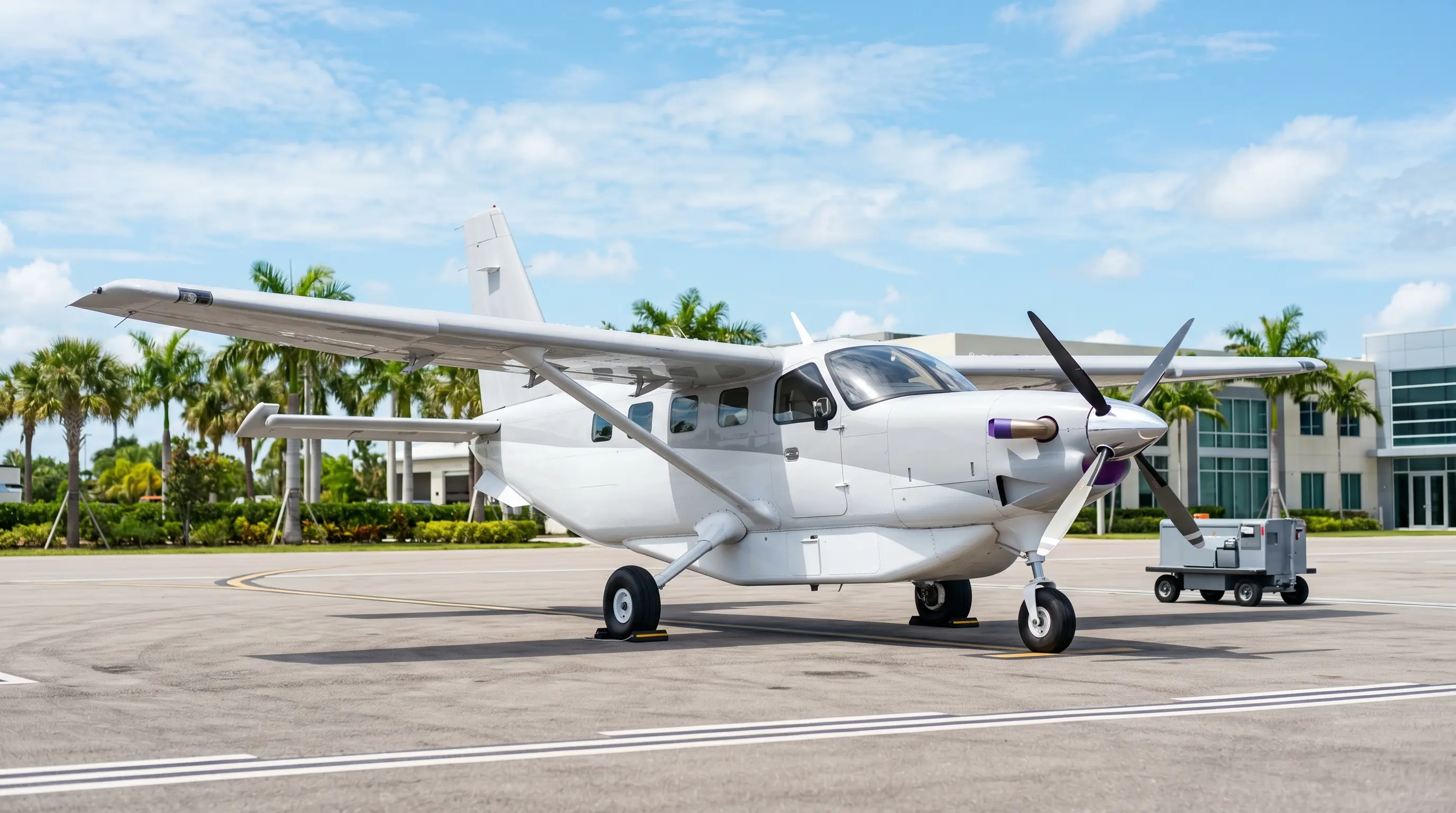 Daher Kodiak 900 Charter View details
 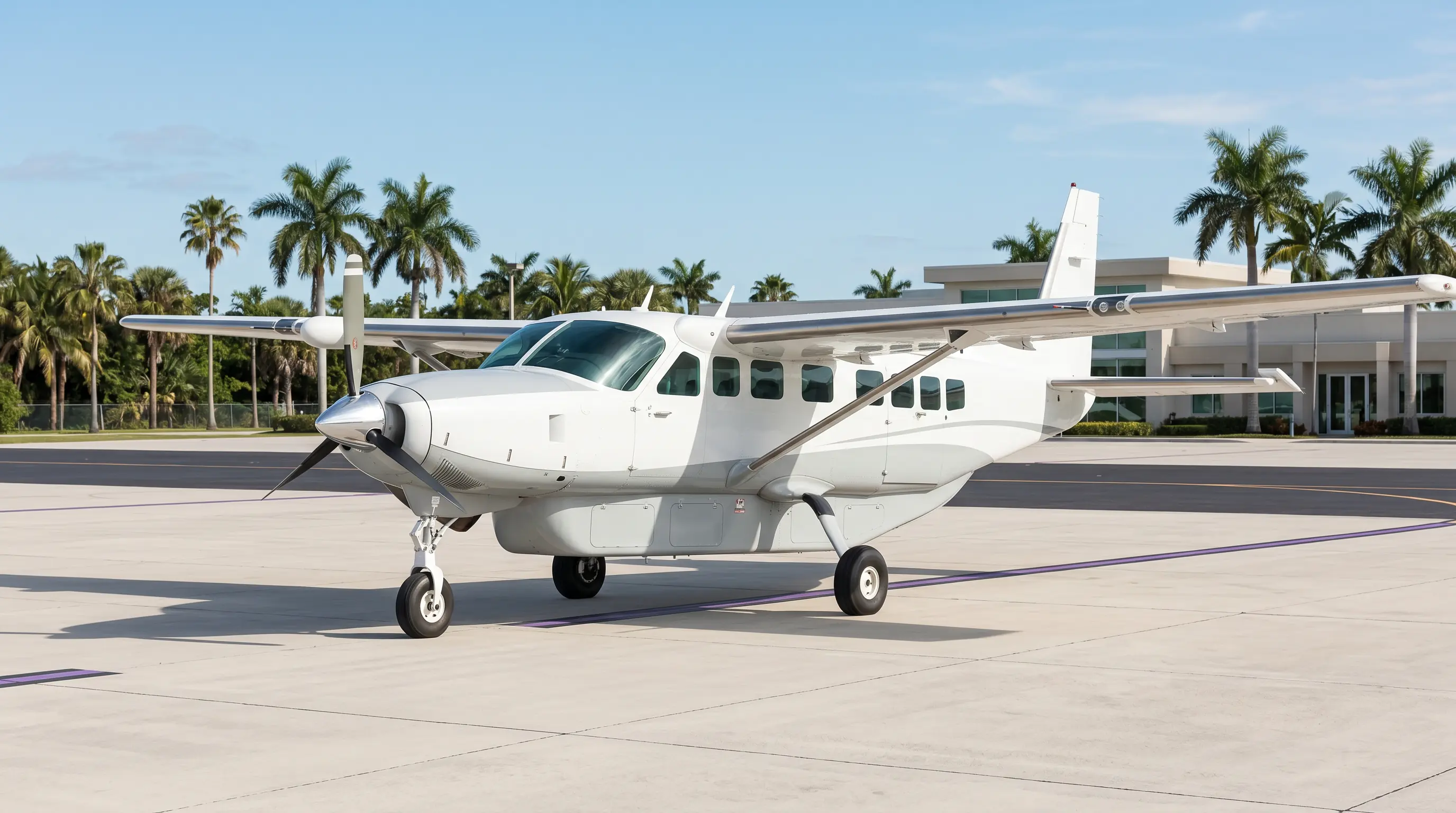 Cessna Grand Caravan EX Charter View details
 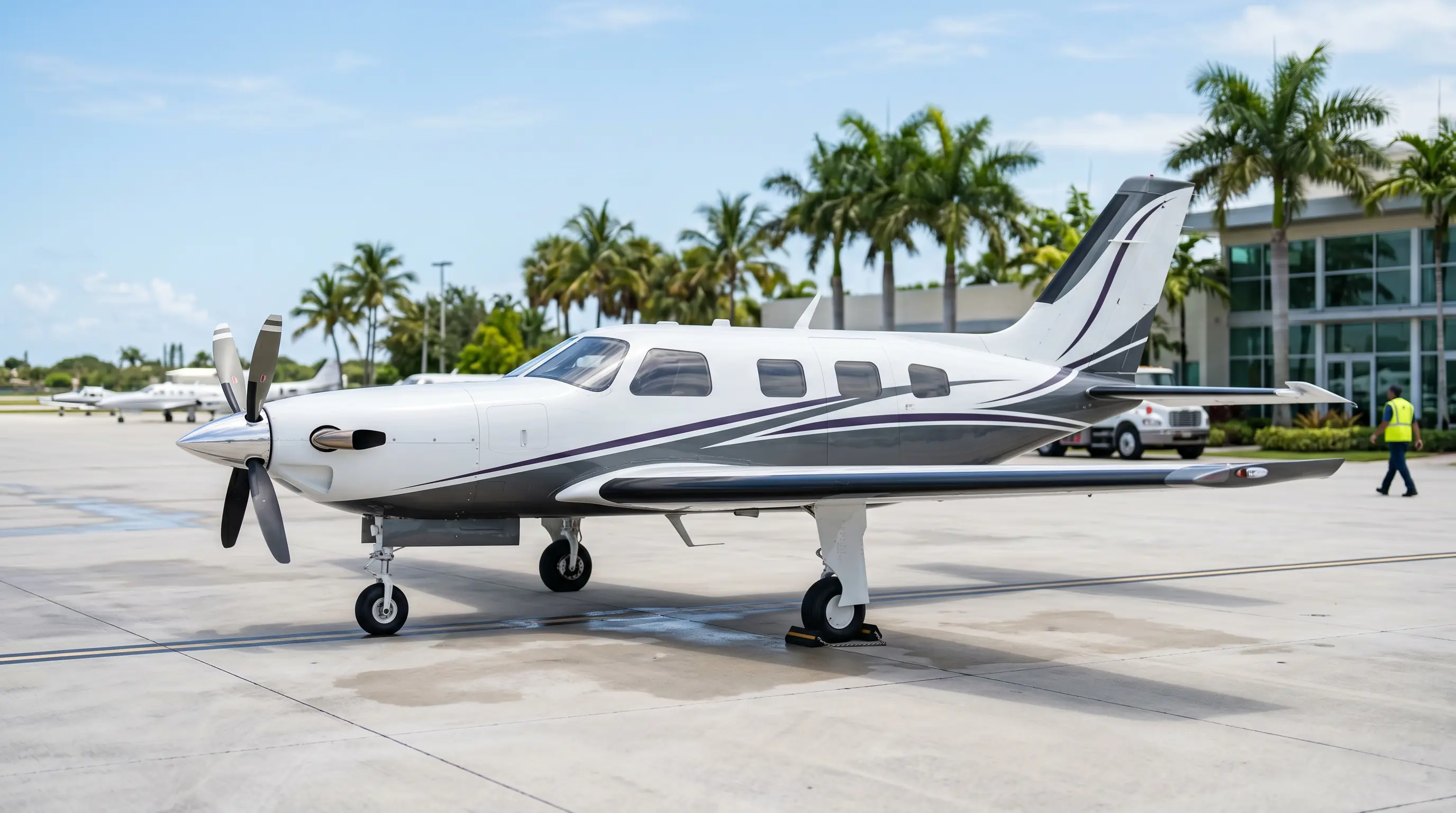 Piper M600/SLS Charter View details
 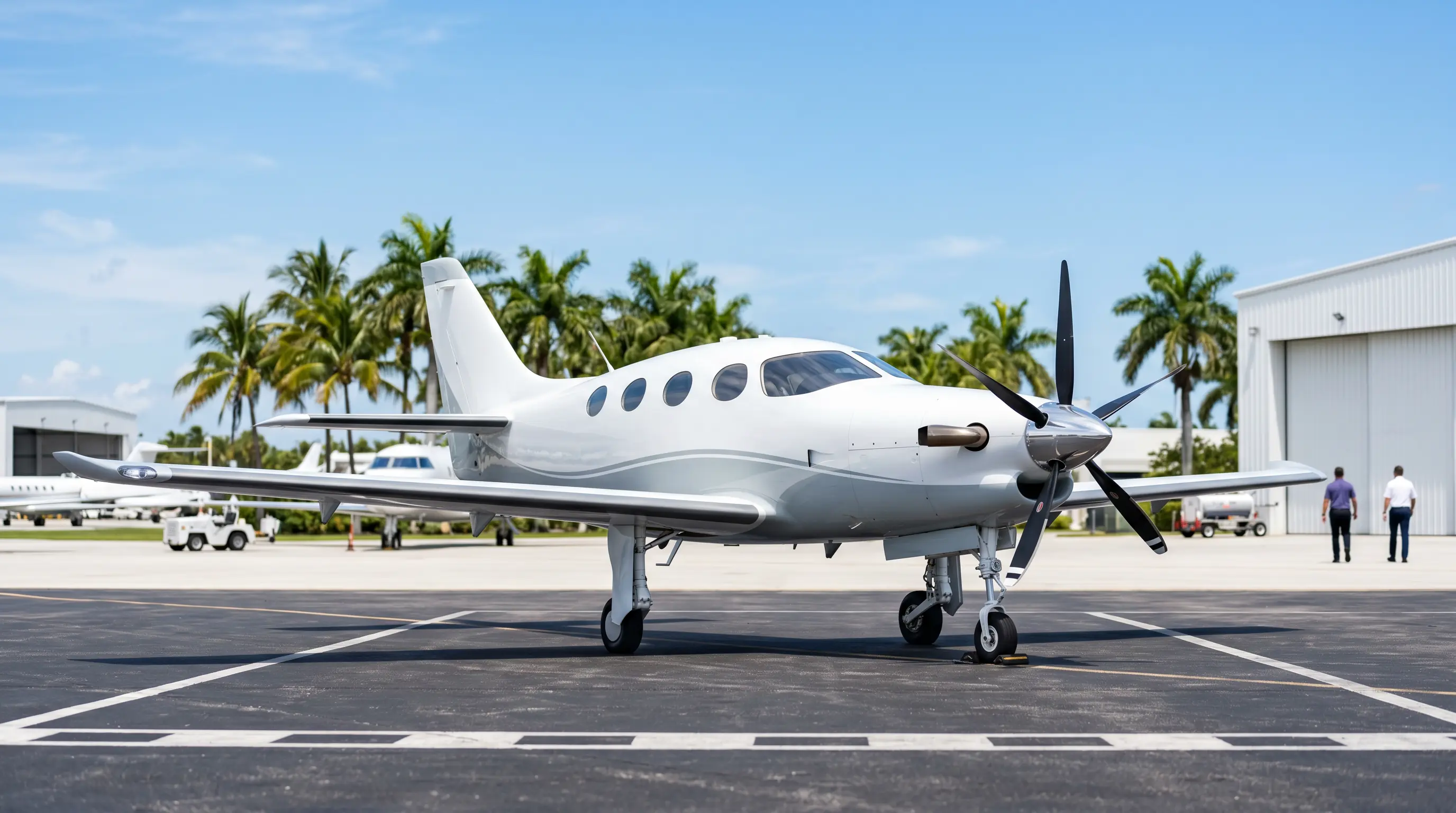 Epic E1000 GX Charter View details
Compare at a glance
| Aircraft | Passengers | Range | Cruise | From (one-way) |
|---|---|---|---|---|
| King Air 350 | 8 | 1,806 nm | 312 ktas | $9,000 |
| King Air 260 | 6–8 | 1,720 nm | 310 ktas | $9,000 |
| King Air C90GTx | 5–6 | 1,260 nm | 272 ktas | $8,000 |
| Pilatus PC-12 | 6–8 | 1,765 nm | 290 ktas | $8,500 |
| Avanti EVO | 6–7 | 1,510 nm | 402 ktas | $9,500 |
| TBM 960 | 4 | 1,730 nm | 330 ktas | $7,500 |
| Kodiak 900 | 6 | 1,129 nm | 210 ktas | $6,500 |
| Grand Caravan EX | 9–10 | 912 nm | 185 ktas | $5,500 |
| M600/SLS | 4–5 | 1,658 nm | 274 ktas | $6,500 |
| E1000 GX | 4–5 | 1,560 nm | 333 ktas | $7,000 |
Why a turboprop makes sense out of Miami
Miami to New York runs about 1,000 nautical miles. The longer-legged turboprops cover that nonstop with a full cabin; the shorter-legged ones may want a quick fuel stop, especially northbound into a winter headwind. Either way, you trade roughly an hour of extra flying for a charter cost that comes in below any jet on the route.
Their runway flexibility also opens up smaller airports around both metros, which can put you a few minutes closer to where you actually started or are headed.
- Among the lowest hourly costs of any private aircraft
- Seats one to nine, sized for families and small teams
- Access to a wide spread of regional fields at both ends
- A genuine, no-drama entry to private flight from South Florida

Turboprop or light jet?
If the budget leads and an extra hour aloft is fine, a turboprop is tough to beat. If you would rather climb higher, cruise faster, and arrive sooner in a jet cabin, the light jet is the next rung up. Tell us your group and your dates, and we will lay both quotes next to each other so the time-versus-cost call is yours to make.
Who flies turboprops on this run
Value-minded travelers, families, and small groups of up to nine — plus anyone who needs a smaller Miami or New York field than the jet airports cover. Broad availability also makes turboprops a solid option when you are booking on short notice.
Turboprops gallery
 Questions
Frequently asked questions
What does a turboprop charter from Miami to New York cost?

A turboprop is usually the most affordable private way to fly the route — around $9,000 to $14,000 one-way (estimated). The number we quote already has fuel, fees, and taxes folded in.
Can a turboprop fly Miami to New York nonstop?
The longer-range models such as the King Air 350 and Pilatus PC-12 fly the roughly 1,000-mile leg nonstop with a full cabin. A few shorter-range turboprops may need a brief fuel stop northbound against winter winds; we will tell you which is which.
How is a turboprop different from a jet?
It cruises lower and slower — figure about an hour longer on this route — but costs less to charter and can use smaller fields. The cabin is pressurized and comfortable, and the FBO experience is the same as with a jet.
How many passengers fit on a turboprop?
Up to nine, depending on the aircraft. The King Air 350 typically seats eight; the single-engine Pilatus PC-12 carries six to eight in a club layout.
 Ready to fly
Ready to fly Miami to New York?
Send your dates and party size for estimated pricing across suitable aircraft — typically within two hours, with no obligation.
 +1 (786) 828-5664
